Understanding Section 25 of the Arms Act, 1959: Legal Provisions, Punishments & Case Law Insights

India takes illegal possession of firearms seriously and for good reason. Every year, thousands of criminal cases involving firearms flood the courts. At the center of most prosecutions sits one powerful provision: Section 25 of the Arms Act, 1959. Whether you’re a law student, a practicing advocate, or simply someone trying to understand firearm laws in India, this article breaks it all down clearly and practically.
The Arms Act, 1959 governs everything related to arms and ammunition in India. It sets out who can legally own, carry, manufacture, or sell weapons. Violate those rules and Section 25 comes into play swiftly and harshly. Let’s explore exactly what this provision says, what punishment it carries, and how courts have interpreted it over the decades.
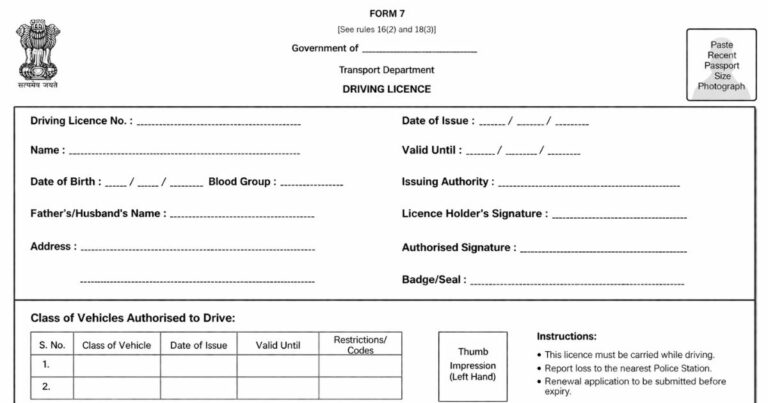
Related Post: Understanding the “Printing of DL in Form 7” Step in India’s Driving Licence Process
Legal Text of Section 25 of the Arms Act, 1959
Section 25 targets anyone who acquires, possesses, or carries prohibited arms or unauthorized ammunition in violation of the Act’s requirements. The provision covers a broader canvas than most people realize. It doesn’t just penalize the person caught holding a gun it also reaches the manufacturer, the seller, the transporter, and even the person who tampers with a weapon’s identity marks.
The key phrase here is “in contravention of the provisions.” That means if you hold an arms license but violate its specific conditions, Section 25 can still apply. It’s not enough to have a license you must comply with every term attached to it. Courts have consistently reinforced this reading while adjudicating arms act legal provisions in India.
Categories of Offences Under Section 25
The scope of this section is genuinely wide. Here’s what qualifies as an offence:
- Possession of prohibited arms or ammunition without a license or in violation of license conditions
- Manufacture or sale making or selling weapons without valid authorization
- Import, export, or transport moving arms without the required permits
- Alteration of identity marks tampering with or removing serial numbers on firearms
- Criminal use deploying arms during robbery, extortion, murder, or similar offences
Even unauthorized ammunition possession just bullets, no gun attracts liability under this section. Courts have repeatedly confirmed that a single unlicensed cartridge is enough to trigger a prosecution.
Punishment under Section 25
The punishments are structured around the severity of the violation. Here’s a clean breakdown:
| Offence | Punishment |
| Possession of prohibited arms/ammunition | Minimum 3 years, maximum 7 years + fine |
| Possession of ordinary arms without license | Up to 3 years imprisonment and/or fine |
| Using arms during commission of a crime | Minimum 5 years to life imprisonment |
| Manufacturing or selling without license | Minimum 3 years, maximum 7 years + fine |
Notice the mandatory minimums. Judges can’t simply sympathize their way to a lighter sentence. The legislature built those floors deliberately ensuring courts treat arms act section 25 punishment with genuine seriousness. That said, the upper ends are equally significant. Life imprisonment for criminal use of arms reflects just how gravely Indian law views weapon-related violence.
Nature of Offence
Three characteristics define how Section 25 operates procedurally:
- Cognizable Police can arrest without a warrant. No prior court permission is needed.
- Non-bailable Bail isn’t automatic. The accused must convince the court that bail is warranted.
- Triable by Sessions Court or Judicial Magistrate, depending on the specific arms category involved.
The cognizable nature gives police powerful authority under the arms act. They don’t wait for judicial approval to make an arrest which makes procedural compliance during seizure all the more critical from a defence standpoint.
Burden of Proof and Presumptions
Here’s where Section 25 diverges sharply from ordinary criminal law. Normally, the prosecution bears the entire burden of proof. Under the Arms Act, however, once the prosecution establishes possession, the burden flips. The accused must now demonstrate they held lawful authority or a valid license.
This statutory presumption is a sharp tool. It means sitting quietly and waiting for the prosecution to fail isn’t an option. If police recover a weapon during a firearm seizure procedure in India and link it to you, you must actively prove your legal right to possess it. Defence advocates earn their keep by challenging the chain of custody, the recovery process, and the very fact of conscious possession a concept we’ll return to shortly.
Landmark Judgments on Section 25 of the Arms Act
1. State of Haryana v. Sher Singh (2002 SCC OnLine P&H 806)
The accused was found carrying a loaded country-made pistol. The Punjab and Haryana High Court upheld the conviction but placed particular emphasis on proving conscious possession not just physical proximity to the weapon. This judgment remains a touchstone for understanding what “possession” legally means in criminal cases involving firearms.
2. Kartar Singh v. State of Punjab, AIR 1994 SC 1654
The Supreme Court took a practical view here. Minor technical lapses during the seizure process if not fundamental to the prosecution’s case don’t automatically destroy the conviction. Courts look at the totality and credibility of evidence rather than jumping at procedural technicalities. It’s a ruling prosecutors frequently cite when defending imperfect seizures.
3. State v. Balvinder Singh, 2015 SCC OnLine Del 9267
Delhi High Court convicted the accused following recovery of a firearm during routine police patrolling. Crucially, the Court stressed procedural compliance during arrest and seizure. This judgment reinforced that while minor lapses don’t collapse a case, systematic procedural failure absolutely can and should.
4. Avtar Singh v. State of Punjab, (2002) 2 SCC 545
Perhaps the most defence-friendly ruling of the lot. The Supreme Court held that mere recovery of a weapon isn’t enough. The prosecution must independently prove the firearm was functional and capable of firing. An inadequate or ambiguous ballistic report has since become one of the most effective defence tools in arms act cases.
Forensic Science and Ballistic Reports
A forensic ballistic report is often the spine of a Section 25 prosecution. It tells the court three critical things: whether the firearm actually works, whether it qualifies as a prohibited arm under the law, and whether any illegal modifications were made. Without a clear, affirmative FSL report, the prosecution walks on thin ice.
Defence counsel routinely challenge these reports on multiple grounds delayed examination, improper chain of custody, or inconclusive findings. The role of forensic report in firearm cases has grown increasingly significant as courts demand more rigorous scientific evidence. In more than a few cases, a flawed ballistic report has been the difference between conviction and acquittal.
Distinction between Section 25 and Section 27
People confuse these two constantly. Here’s the clean line:
- Section 25 Covers possession, manufacture, sale, transport, and related offences. It doesn’t require any actual use of the weapon.
- Section 27 Specifically punishes the use of a weapon, particularly during the commission of another offence.
Both can be charged simultaneously. If someone carried an illegal firearm to a robbery and fired it, expect both sections in the charge sheet. The difference between section 25 and 27 of the Arms Act matters because Section 27 carries heavier penalties tied directly to violent conduct.
Section 25 in Relation to Other Laws
In complex criminal matters, Section 25 rarely operates in isolation. Prosecutors combine it with other legislation to build a more formidable case:
- Unlawful Activities (Prevention) Act (UAPA) Used in terrorism-linked arms cases
- Explosive Substances Act Where firearms accompany explosives
- NDPS Act Drug trafficking operations frequently involve armed protection
This combination dramatically escalates the case’s gravity. It affects bail hearings, sentencing, the court’s jurisdiction, and even how the accused is perceived during trial. The illegal arms trade in India increasingly intersects with narcotics and organized crime and courts are well aware of that reality.
Defence Strategy in Section 25 Cases
A strong defence in a Section 25 case attacks the prosecution from multiple directions simultaneously. Here are the main lines of attack:
Challenging the search and seizure Was proper procedure followed under BNSS/CrPC Sections 100 and 165? Were independent witnesses present? Any deviation here can seriously undermine the prosecution.
Disputing conscious possession Physical proximity to a weapon doesn’t automatically mean legal possession. Courts recognize that someone can be near a weapon without knowingly possessing it. This is one of the most frequently raised defences in how to defend arms act cases in court.
Attacking the FSL report If the weapon was non-functional or the ballistic report is inconclusive, the prosecution’s foundation cracks. Avtar Singh makes this argument legally potent.
Alleging false implication In India’s adversarial legal landscape, police-accused enmity or political motivation sometimes explains why an innocent person gets framed. Establishing motive for false implication is a legitimate and often effective defence ground.
Recent Trends and Statistics
Crime statistics from the Ministry of Home Affairs consistently show a sharp rise in cases under Section 25 particularly in border districts and urban centers where gang rivalries and political tensions escalate into armed violence. Cities like Delhi, Mumbai, and Lucknow see high FIR registration under this provision.
The illegal arms trade in India has also gone digital in parts with social media and encrypted apps facilitating weapon transactions. Law enforcement agencies have responded by deploying more proactive intelligence-led policing. That shift means more Section 25 prosecutions but also more instances of challenged recoveries, making procedural compliance more important than ever.
Is Section 25 a Compoundable Offence?
No. Section 25 offences are strictly non-compoundable. Parties cannot privately settle the matter, shake hands, and walk away. The state takes over prosecution and the case must run its course through the judicial system. This is fundamentally different from minor civil disputes once an FIR is registered under Section 25, only the court can bring it to a close.
This non-compoundable nature also means that even if the complainant forgives the accused, the prosecution continues. The state’s interest in curbing illegal possession of firearms in India overrides private settlements. It’s a policy choice and a firm one.
Bail Under Section 25: Judicial View
Bail under Section 25 is genuinely difficult to secure. Courts approach these applications with considerable caution and weigh several factors carefully:
- Type of weapon prohibited vs. non-prohibited arms
- Number of weapons recovered
- Whether the weapon was actually used in a crime
- Accused’s prior criminal history
- Delay in investigation or trial
In bail in arms act cases, courts frequently emphasize that arms offences threaten public order. However, prolonged pre-trial incarceration without adequate justification also invites challenge. Courts have occasionally granted bail where the FSL report was absent or inconclusive signaling that even in non-bailable offences, evidentiary gaps matter.
Conclusion
Section 25 of the Arms Act, 1959 is one of India’s most consequential criminal law provisions. It gives law enforcement genuine teeth to tackle illegal arms possession but those same teeth can bite innocent people when the provision is misapplied. The statutory presumption, non-bailable nature, and mandatory minimum sentences combine to create a formidable legal challenge for any accused.
For advocates, the battleground is evidence the FSL report, the seizure procedure, the question of conscious possession. For courts, the task is balancing public safety against individual liberty. And for citizens, understanding this law is simply smart. Because in India’s legal landscape, knowing what Section 25 actually says and what it demands can make all the difference when it matters most.

Arjun Sethi is a legal researcher and columnist specializing in constitutional and comparative law. A graduate of NALSAR University, he has published in leading law journals and advised policy think tanks. His work bridges theory and practice, offering readers precise, well-researched insights grounded in academic rigor and ethical clarity.