Understanding the “Printing of DL in Form 7” Step in India’s Driving Licence Process
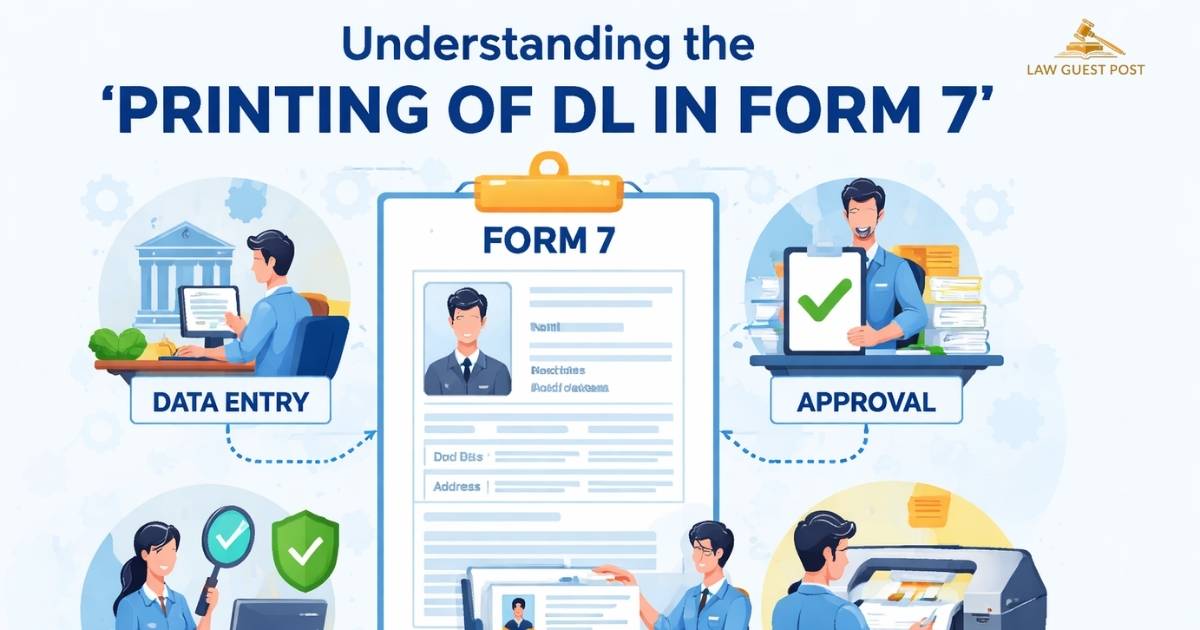
If you’ve recently applied for a driving licence in India, you’ve probably seen the status “Printing of DL in Form 7” on the Parivahan portal and wondered what it actually means. Don’t worry this confusion is completely normal. Thousands of applicants encounter this stage every year without fully understanding it.
Simply put, this status means your application has been approved and your licence card is now being printed in the official government-prescribed format. It’s the final stage before your card gets dispatched to your address. Understanding the printing of DL in Form 7 helps you avoid unnecessary anxiety, skip pointless RTO visits, and know exactly what to expect next. This article explains the meaning, legal basis, timeline, and practical steps you should take during this stage so you stay informed and confident throughout the process.
Related Post: Understanding the “Printing of DL in Form 7” Step in India Driving Licence Process
Legal and Regulatory Framework
India’s driving licence system runs on a solid legal foundation. The Motor Vehicles Act, 1988 and the Central Motor Vehicles Rules, 1989 (CMVR) govern the entire process of issuing, renewing, and formatting driving licences across the country. Rule 16(2) of the CMVR specifically mandates that all licences whether laminated or smart card type must be issued in Form 7. This isn’t optional. It’s the law.
The government introduced this standardised format to bring uniformity across all states and union territories. Before this, there were inconsistencies in how licences looked and what information they carried. Form 7 fixed that. It defines everything the card dimensions, the data fields, the security features, and the verification elements so that every licence printed in India meets the same national standard.
What Does “Printing of DL in Form 7” Mean?
When you track your DL application status on the Parivahan portal, you’ll notice several stages appearing one after another. These typically include application submission, document verification, fee payment, authority approval, and finally printing of DL in Form 7. Reaching this stage is genuinely good news. It means your application has cleared every hurdle and is now in the final production phase.
In simple terms, this status tells you that your physical driving licence card is currently being printed in the official government-prescribed format. Think of it like a book going to the press the content is ready and approved, and now it’s just being put on paper (or in this case, a smart card). The DL printing process in Form 7 is handled by automated systems integrated with the Parivahan database, not by anyone doing it manually at the RTO counter.
Importance of the “Printing of DL in Form 7” Stage
This stage matters more than most people realise. For starters, it’s the point where your licence becomes a real, tangible document. Without this step, there’s no physical card and no card means no valid proof of authorisation to drive. The licence approval and printing stage is what transforms an approved application into something you can actually carry in your wallet.
Beyond that, Form 7 cards come loaded with security features. Smart card versions carry an embedded chip, while both types include barcodes, holographic seals, and lamination. These features make the card tamper-proof and machine-readable. Law enforcement officers, insurance companies, and government databases can all verify your licence instantly using the QR code or DL number. So this isn’t just printing for the sake of it it’s producing a secure, legally valid identity document.
What Happens After “Printing of DL in Form 7”?
Once your licence is printed, the process moves into its final phase. In most states, the RTO licence delivery process works through Speed Post or Registered Post. Your card gets dispatched directly to the address you registered during your application. Some states, however, allow you to collect the card in person from the Regional Transport Office so it’s worth checking your state’s specific procedure.
After you receive the card, don’t just toss it in a drawer. Take a few minutes to verify every detail your name, photograph, address, vehicle class, validity dates, and signature. If anything looks wrong, report it to your RTO immediately. Fixing errors after this point requires a fresh application in most cases, so catching mistakes early saves a lot of hassle. Also, once you receive the card, it becomes your primary valid driving document for all legal purposes.
Practical Tips for Applicants
Here’s some practical advice to help you get through this stage smoothly. First, track your DL dispatch status online regularly. The Parivahan portal updates automatically once the card is dispatched, and you’ll usually get a postal tracking number. Use it it saves you from making unnecessary trips to the RTO.
Second, if your old licence is still valid or you applied before its expiry, carry your application acknowledgement receipt while driving. This serves as temporary proof during the transition period. Also, make sure your DigiLocker or mParivahan app has your digital DL activated. The digital version is legally recognised under the Information Technology Act and works as valid driving proof until your physical card arrives.
Common Reasons for Delay in Printing
Let’s be honest delays happen. If your status has been stuck at “Printing of DL in Form 7” for more than a week, don’t panic immediately. There are several common DL printing delay reasons in India that are entirely outside your control.
High application volumes in metro cities often create printing backlogs. Smart card material shortages, printer downtime, or technical glitches in the Parivahan system can also slow things down. Sometimes, minor discrepancies in biometric data or photographs cause a temporary hold before printing begins. Postal delays after dispatch are another common issue, especially in remote areas. If your status hasn’t changed for more than 30 days, that’s when you should file a grievance through the Parivahan portal or visit your RTO with your acknowledgement receipt.
Legal Perspective on Form 7 Licences
From a legal standpoint, Form 7 isn’t just a template it’s a mandatory requirement. A licence that doesn’t conform to this format can be considered irregular or even invalid if challenged in legal proceedings. The form prescribes specific card dimensions (85.6 mm × 54 mm), mandatory data fields, and required security elements. These aren’t suggestions. They’re enforceable specifications.
For legal practitioners, understanding Form 7 driving licence details is particularly useful in motor vehicle cases. If a client’s licence renewal is under process and the status shows “Printing of DL in Form 7,” this can serve as documentary evidence that the licence was validly renewed and is simply awaiting dispatch. Courts and insurance companies generally accept this status as proof of a pending, approved licence. Lawyers should advise clients to screenshot this status and store it safely.
Legal Implications and Practitioner’s View
For advocates handling motor vehicle disputes, accident claims, or licence-related cases, the “Printing of DL in Form 7” status carries real evidentiary weight. It confirms that the licensing authority has formally approved the application and that the licence is in the process of being issued. This distinction matters especially in cases where the accused is charged with driving without a valid licence.
Practitioners should also note that driving licence verification in India is now fully digital. Every Form 7 licence is registered in the Parivahan database the moment it’s approved for printing. This means that even before the physical card reaches the applicant, the licence is verifiable online using the DL number or application reference. Advising clients to preserve digital evidence of this status screenshots, portal records, and postal tracking can make a meaningful difference in litigation outcomes.
Summary and Takeaway
Let’s bring it all together. The printing of DL in Form 7 is the final production stage of your driving licence application. It means everything has been verified and approved and your card is being printed in the official, legally mandated format under the Central Motor Vehicles Rules, 1989.
Here’s what you need to remember: track your status online, carry your acknowledgement receipt while driving, use your digital DL until the card arrives, and verify every detail once it does. If there’s a delay beyond 30 days, take action through the Parivahan grievance portal. And if you’re a legal professional treat this status as valid documentation of an approved, pending licence in relevant proceedings.
Conclusion
The phrase “Printing of DL in Form 7” sounds complicated but it really isn’t. It simply means your licence is approved, standardised, and being prepared for delivery. The entire process reflects how India’s transport administration has modernised over the years moving from fragmented, state-level inconsistencies to a unified, digitally integrated system under the Parivahan Sewa initiative.
So the next time you see this status, take a breath and relax. You’re at the finish line. Your licence is on its way, and India’s centralised licensing infrastructure is working exactly as it should. A little patience now, and you’ll have a legally valid, security-enabled driving licence card in your hands very soon.

Arjun Sethi is a legal researcher and columnist specializing in constitutional and comparative law. A graduate of NALSAR University, he has published in leading law journals and advised policy think tanks. His work bridges theory and practice, offering readers precise, well-researched insights grounded in academic rigor and ethical clarity.